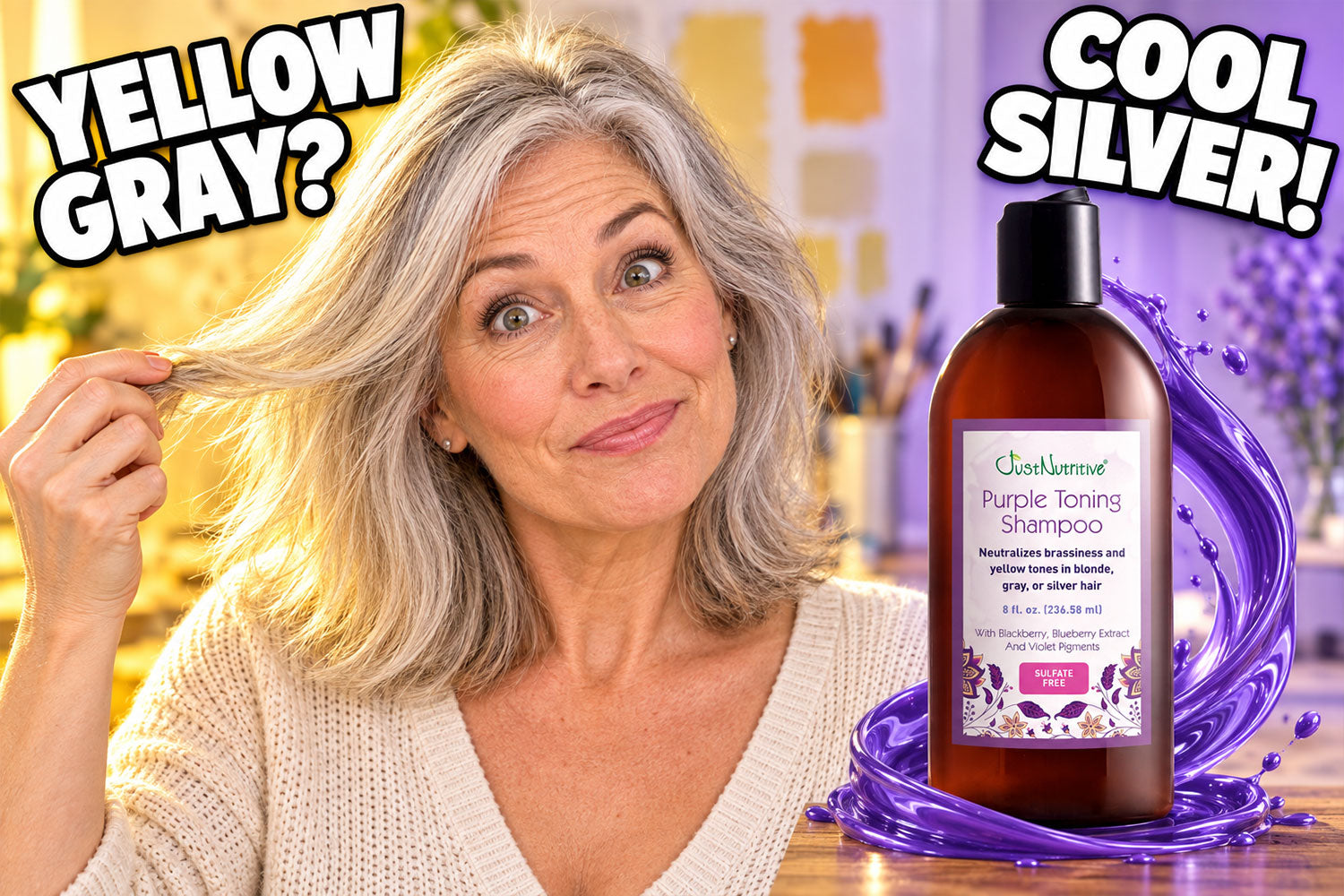
The best shampoo for gray hair avoids harsh detergents and relies on gentle, nourishing ingredients that support moisture and shine. Because gray hair tends to be drier and more porous than pigmented hair, certain ingredients can either help maintain softness or contribute to dullness and buildup. Understanding what to avoid and what to look for can make choosing the right shampoo much easier.
Gray hair is typically more porous and loses natural moisture over time. Without melanin, the hair shaft becomes more vulnerable to environmental exposure, mineral buildup, and dryness.
Many people also notice gray hair feels coarser, which is often connected to reduced scalp oil production as we age. Because of these changes, gray hair benefits from shampoos that cleanse gently while supporting hydration and strength.
Some common shampoo ingredients may create challenges for gray hair.
Sulfates like sodium lauryl sulfate remove oil effectively but can strip moisture from already dry strands, leaving hair rough or brittle over time. Strong synthetic pigments in some purple shampoos may leave temporary tinting on very porous white hair when used daily. Silicones create smoothness but repeated use leads to buildup that weighs hair down and reduces shine.
Gentler formulas that avoid these ingredients offer a more balanced approach for gray hair.
Many shampoos designed for gray hair focus on mild cleansers and nourishing ingredients.
Gentle cleansing agents like decyl glucoside remove impurities without stripping natural moisture. Antioxidant-rich oils such as avocado and pomegranate seed oil nourish hair and help protect against oxidative stress. Hydrolyzed rice protein supports hair structure and may improve the appearance of strength and elasticity in porous strands. Rosemary oil has been studied for its ability to support scalp circulation and overall hair health.
Together these ingredients cleanse, nourish, and protect gray hair without the tradeoffs of harsher formulas.
Choosing a shampoo for gray hair is about simplicity and consistency rather than dramatic treatments.
Look for gentle cleansers, plant oils, and strengthening proteins rather than heavy coatings or strong detergents. Scalp health matters too. Rosemary and lavender essential oils are commonly used to support scalp balance while providing a light botanical scent.
Used regularly alongside occasional clarifying care, a gentle shampoo can help gray hair maintain softness and brightness over time.
Many people avoid sulfates, heavy silicones, artificial dyes, and harsh preservatives because these ingredients may contribute to dryness, buildup, or scalp irritation.
Gentle sulfate-free cleansers, antioxidant oils, and strengthening proteins can help maintain softness and manageability.
Gray hair often produces less natural oil and tends to be more porous, which allows moisture to escape more easily.
Purple shampoos can neutralize yellow tones, but frequent use may leave pigment on very porous hair.
The Just Nutritive Gray Hair Shampoo uses aloe vera hydrosol as its base with clover flower and guava fruit extracts to support brighter, stronger-looking strands. Avocado oil, pomegranate seed oil, and blackcurrant seed oil provide nourishment while hydrolyzed rice protein and panthenol support structure and softness. Rosemary and lavender essential oils contribute to a balanced scalp environment.
Free from sulfates, parabens, silicones, artificial fragrance, and synthetic colorants.