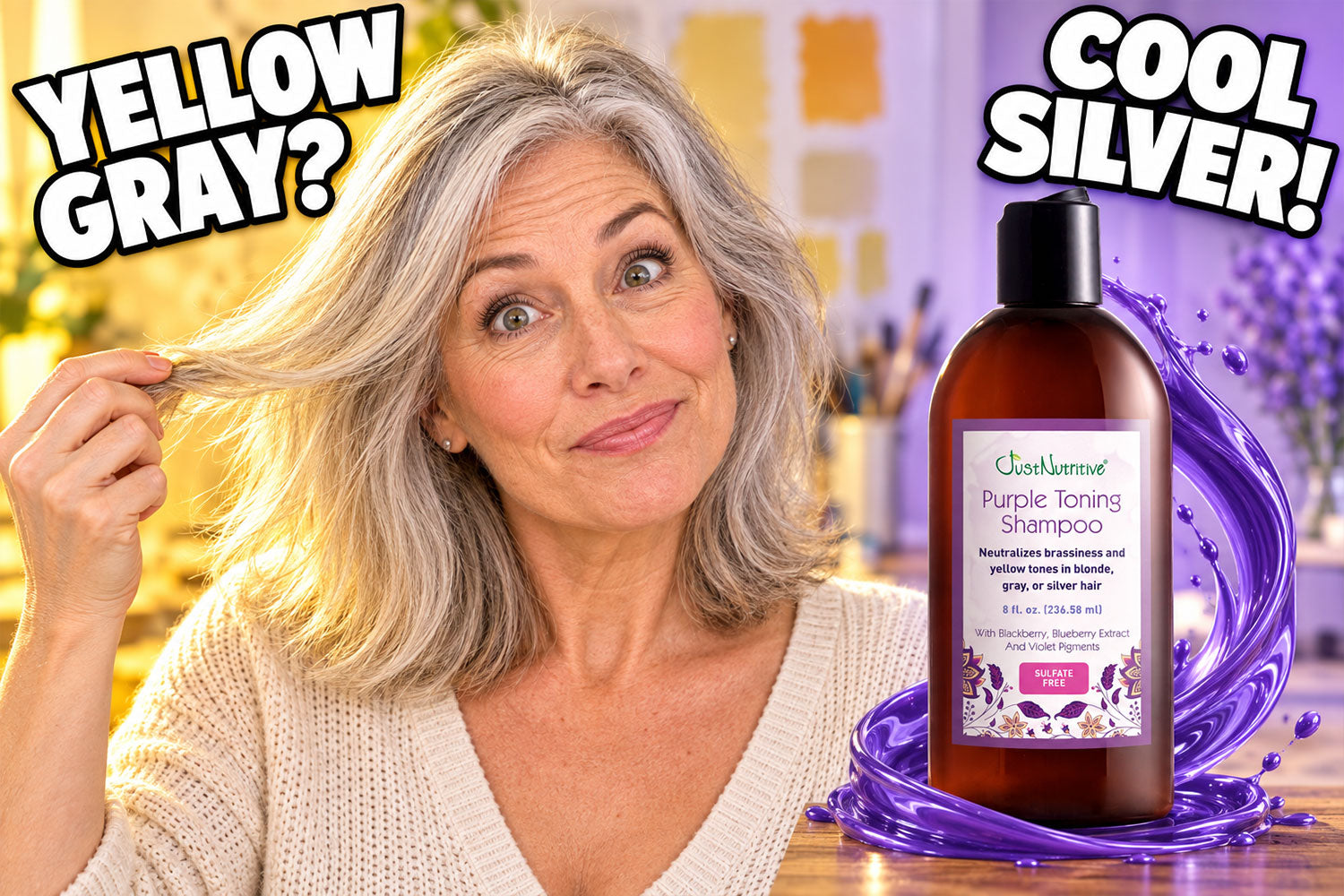
Gray and silver hair can sometimes develop a yellow or brassy tint over time. This usually has less to do with aging and more to do with environmental buildup. Because gray hair tends to be more porous than pigmented hair, it can absorb minerals, residue, and environmental particles more easily. Understanding what causes yellowing is the first step toward keeping silver hair looking brighter and healthier.
When hair loses melanin, the pigment responsible for its natural color, its structure often changes as well. Gray and white strands tend to become more porous, meaning they can absorb substances from the environment more easily than darker hair.
This porous structure acts almost like a sponge. Minerals from hard water, airborne pollutants, UV exposure, and product residue can settle into the hair shaft. Over time, these particles can create the yellow or brassy tint that many people notice in gray or silver hair.
Because lighter hair reflects light differently than darker hair, even small amounts of buildup can become visible. What might go unnoticed on darker hair can appear more obvious on silver strands.
Several everyday factors can contribute to yellowing in gray hair.
Hard water is one of the most common causes. Minerals such as calcium and magnesium can attach to the hair shaft and leave a dull or slightly yellow appearance.
Sun exposure can also play a role. UV rays may alter the surface of the hair over time, affecting how light reflects off the strands.
Environmental pollution, smoke, and styling product buildup can add additional residue that gradually dulls the natural brightness of silver hair.
Even some shampoos and conditioners can leave behind deposits that accumulate over time if they are not rinsed thoroughly.
Maintaining brighter gray hair usually involves focusing on two things: removing buildup gently and supporting moisture balance.
A mild, sulfate-free shampoo can help cleanse away residue without stripping the hair of natural moisture. Because gray hair can be more delicate, gentle cleansing is often better than harsh formulas that may dry the hair further.
For people living in areas with hard water, using a mineral-removing rinse occasionally can help loosen deposits that cling to the hair shaft. This type of treatment helps remove buildup that regular shampoo may not fully dissolve.
Hydration is also important. When gray hair is well-moisturized, the cuticle tends to lie flatter, which allows hair to reflect light more evenly. This can help silver hair appear smoother and brighter.
A few small adjustments in your routine can also help maintain brighter-looking gray hair.
Wash with cool or lukewarm water to help keep the cuticle smooth.
Avoid overwashing, which may dry the hair and make discoloration more visible.
Rinse styling products thoroughly to prevent residue buildup.
Protect hair from extended sun exposure when possible.
Use lightweight conditioning products to maintain softness between washes.
Consistent care can help gray hair stay reflective and healthy-looking over time.
A routine that includes gentle cleansing, occasional mineral removal, and lightweight hydration can help maintain brighter and smoother-looking gray hair.
Gray hair is naturally more porous than pigmented hair, so it can absorb minerals, environmental particles, and product residue more easily. Regular washing helps, but some buildup may require gentle mineral-removing treatments to fully clear away deposits.
Yes. Hard water contains minerals that can attach to the surface of the hair. Over time, this buildup may create a dull or yellow tone, particularly on lighter hair colors.
Sun exposure can contribute to changes in how light reflects off the hair. UV rays may alter the outer layer of the hair shaft, which can make discoloration more noticeable.
A routine that includes gentle cleansing, occasional mineral removal, and lightweight hydration can help maintain brighter and smoother-looking gray hair.